




Burlesque in Connecticut
By Alex Dueben
Burlesque flourished in the late 19th and early 20th centuries. Similar to vaudeville, it was a variety show featuring a combination of comedy, dance, variety acts, striptease and more. Eventually, it became known for striptease and for performers like Gypsy Rose Lee, Sally Rand, and Hartford native Ann Corio. Though it largely died out in the 1990s, Neo-burlesque emerged which pays homage to old school burlesque but has its own attitude and approach.
You can find these shows in Connecticut, though in smaller venues, not large theaters where burlesque shows played in their heyday. In Neo-burlesque, striptease remains the center of the show, but it’s less about sexual titillation and more about queering gender norms. Contemporary performers have very consciously sought to use burlesque as a form of expression and, much like drag, use it to explore ideas around gender performance and identity.
None of which, however, explains exactly what burlesque is in the context of 2026.
“The typical definition I go to is that it’s a compilation of striptease and comedy and performance, and sometimes satire and storytelling,” burlesque performer Ladybird Vixen said in a recent conversation. “When I’m teaching workshops, I say, burlesque is whatever the f*** you want it to be.”
Ladybird Vixen described getting into burlesque as “accidental.” Interested in dance and performing since childhood, she got into pole dancing. “One of the studios that I was going to shared space with a burlesque troupe and belly dance classes. And so on a whim, I applied for one of their shows,” she said. “I relocated to Connecticut in 2023 and realized that I just really liked burlesque. I liked the community. I liked the art form.”
Ladybird Vixen has been performing and producing at New England Brewing Company in Wallingford, Small Batch Cellars in North Haven, and other venues across Connecticut and Massachusetts. “I do think [burlesque] is inherently queer just because it is a radical form of expression,” she said.
“Maybe the act itself is also queer, even if it has nothing to do with the sexuality of the performer,” Ladybird Vixen said. “Burlesque is inherently queer for me because I’m queer, whereas I don’t know if a straight person would have the same perspective.
“Every person who does burlesque does it in a different way. This, I think, also lends itself to the queerness of the art form,” Professor Marvin, another performer and producer said. “I think one of the things that makes burlesque inherently queer in a lot of ways is that it questions the roles that we put on.”
Professor Marvin came to burlesque as a fan in the early 2000s, years before he ever performed. “I thought it was so much fun. The combination of theater, comedy and storytelling and stripping. Back then, this was the time of post-90s politically incorrect, edgy humor. All these things came together into a really fun and irreverent environment. If you remember what drag was like at that time, it was very similar,” he said.

“I got to know a bunch of local performers and producers in the scene. I wasn’t performing myself. I had a background in theater in school and college, and doing a little bit of acting. In 2015, I was talking with a friend who was stressing out about a Halloween show he was producing. I made my pitch. I asked if I could co-host the show with him and perform, and he didn’t bat an eye. I did my first show in October of 2015 at Hardcore Sweet Cupcakes in Watertown. It all just sort of kept going from there.
“I started as a suit and tie wearing, singing, hosting guy, and then over time, I just kept adding more and more stuff, and the costumes got sparklier and smaller as I went on.”
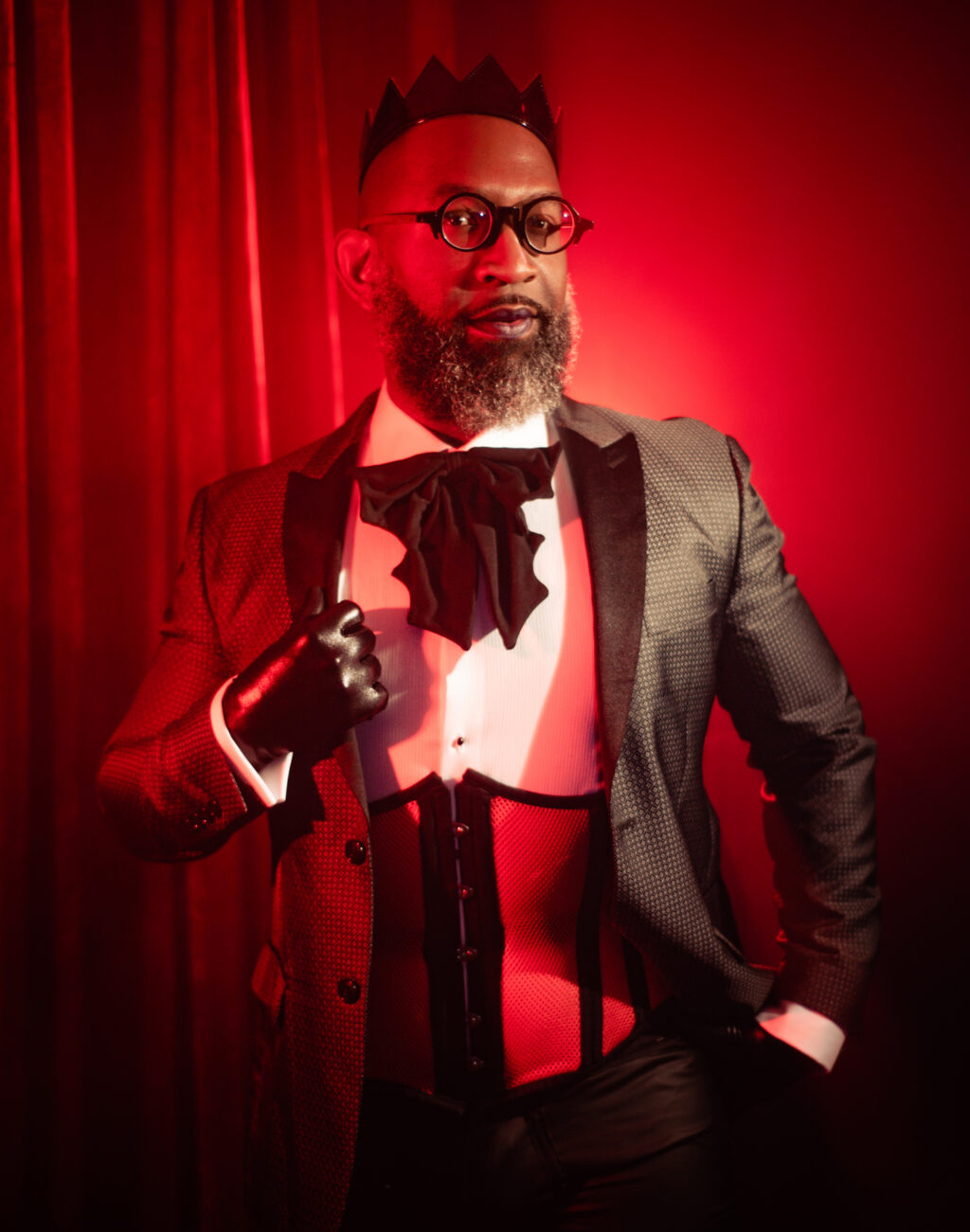
Professor Marvin produces and hosts Scandalous Saturdays Burlesque monthly at Trevi Lounge in Fairfield. Professor Marvin also brought up the relationship of burlesque to drag, calling the two art forms “siblings.”
“You’re dealing with uncovering these ideas of gender as performance, of gender as costuming, of gender as ‘I’m supposed to wear this and walk around like that,’” he said.
“The dominant queer performance art is drag. There’s nothing wrong with that. I love drag,” Professor Marvin said. There are a ton of burlesque performers that also perform drag and incorporate drag elements into what they do. But [those are] men performing. And women want to see themselves up there. They want to see themselves perform, too.”
“Burlesque was part of my own road to accepting my own queer identity,” Professor Marvin continued, “and being able to put a name on that. Doing so has just made my life so much more full, so much more expansive.”
Both Professor Marvin and Ladybird Vixen mentioned that burlesque is often misunderstood. “A common misconception is [the experience] is going to be men ogling women. I’ve even had venues that say, we want to make sure these are also women friendly events. I’m like, ‘you don’t understand, this is women-centric, actually,’” Ladybird Vixen said.
Burlesque shows have a largely female audience, in part because the audience understands what’s going on. That the performers strip, but a lot more is going on. Part of that is who is on stage. “The core piece of burlesque is that every body is worthy of doing burlesque. Every body is worthy of being heaped in glamour and rhinestones and to be seen on stage,” Professor Marvin said.
“Sooner or later,” Professor Marvin said of the shows that he, Ladybird Vixen and other locals produce, “you’re going to run into a body that you yourself are not attracted to. You have one of two options there. You can turn away. Or, is that the moment that you let the artistry in?”
“And if you let the artistry in, then how you view people, how you view humans, and how you view desirability, glamour, grace, bodies imbued with power and confidence, will change,” Professor Marvin said. “I had a gay male friend of mine who hadn’t been coming to my show because he said, ‘I’m not attracted to women. I don’t need to see female flesh.’ Then [he] had to sit and think about it because he liked what I did,” Professor Marvin said. “[My friend] decided to, and he said, ‘this show is great. These women are performing amazingly.’
“He let the artistry in,” Professor Marvin said. “If you’re only going to do burlesque to be attracted to it [sexually], you’re going to miss out on so much. If it’s not a body that you are attracted to, then see the artistry.”
Both artists struggled to rebuild their audiences after the pandemic but cited a new generation of performers and attendees that have grown up since then, and the way that burlesque performers and community are very connected.
“We like to lift each other up as much as we can,” Professor Marvin said. “Even to the point that we coordinate our shows so that nobody is scheduling their show on the same night as someone else’s. We’ll tell our own different audiences about each other’s work.”
“Going back to my motto about burlesque is that it’s what you make it,” Ladybird Vixen said, “I’m sure there are folks that walk in and don’t even realize the queer component of it but still enjoy the show. Then there are also people who are going to walk in and go, ‘holy shit, this space is queer as f***, and I feel the support and I feel the community.’ It’s going to be something different for that individual.”
“Go see as much of it as you can,” Professor Marvin concluded. “Go participate as much as you can because it’s all different. Every person who does burlesque does it a different way.”
More Stories
‘Oh, Mary! ‘Oh, Alaska!
2026 Fall Arts Preview
Off Broadway Review: An American Daughter