




Revelation and Repression in Thornton Wilder’s New Haven
By D.R. Lewis
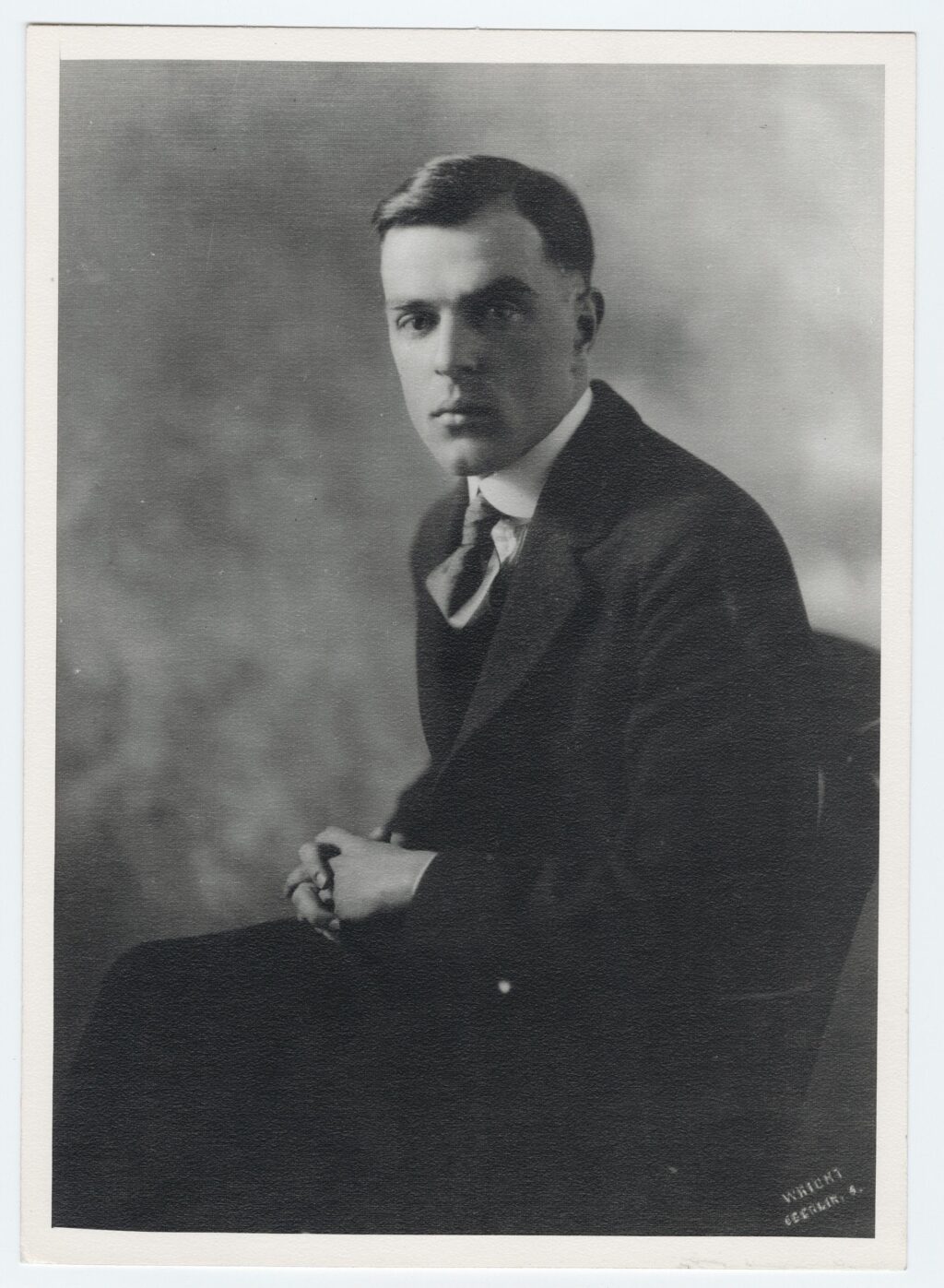
Thornton Wilder was not a nutmegger by birth, but he may as well have been. In the fifty years since his death, the Yale University alumnus and Pulitzer Prize-winning writer of Our Town and The Bridge of San Luis Rey has become something of a literary mascot for greater New Haven, where his family home still stands on Hamden’s Deepwood Drive. But Wilder’s Connecticut connection began more than a half century earlier, and early letters held in Yale’s Beinecke Rare Book and Manuscript Library indicate that this nascent period in New Haven was pivotal to the author’s creative—and perhaps sexual—development.
Thornton was born in Madison, Wisconsin to Isabella and Amos Parker Wilder, a newspaper publisher descended from a Derby-born great-grandmother raised only twelve miles west of Hamden and the “house The Bridge built.” The annual royalties from his international bestseller were so great that Thornton used them to purchase the land on Deepwood Drive for $7,500 and to construct the family home in 1929 for $21,500. The home remained a center for the Wilder family until well after Thornton’s death in 1975, but its fame obscured the previously itinerant life of Thornton’s childhood.
Thornton spent a significant portion of his boyhood in China, where his father’s aspirations to public diplomacy took the family despite the personal financial strain of performing under-funded public appointments. The ever-present specter of poverty and diasporic nature of the family’s existence would provide emotional fodder for now-beloved works like The Skin of Our Teeth and his classic one-act, The Long Christmas Dinner, but the loneliness and unhappiness took a toll on the young Thornton.
Thornton was also stymied in his artistic expression. Amos Parker sought to suppress his son’s “delicate, girl-playing, aesthetic” tendencies by enrolling him in boys’ schools and farm labor programs. Thornton was especially crushed when his father forced him to withdraw from playing Lady Bracknell in The Importance of Being Earnest while at California’s Thacher School.
Those adolescent years are typically formative for LGBTQ+ people, as opportunities to explore sexuality become more accessible. Speculation around Thornton’s sexual orientation began during his lifetime and has remained a topic of interest for artists, biographers, and critics even in the absence of definitive evidence. Richard Goldstone’s 1975 biography, Thornton Wilder: An Intimate Portrait, considers Thornton’s rumored same-sex attractions and their implication on his platonic and familiar relationships in connection with gay writers like Oscar Wilde, Walt Whitman, and Thomas Mann. Linda Simon’s 1978 Thornton Wilder: His World offers the first major link between Thornton and Samuel Steward, a writer and tattoo artist whose alleged sexual encounters with Thornton in Zurich have formed the basis for much of the debate surrounding physical consummations of his rumored desire. And Gilbert Harrison’s 1983 book, The Enthusiast, puts the matter before Wilder’s friends and colleagues, whose assessments go so far as to deem him a “neuter.”
But in her definitive 2012 biography, Thornton Wilder: A Life, author Penelope Niven offers the most assertive assessment:
“A very private man who often saw his fame as an intrusion into his personal life, Thornton Wilder seems to have studiously kept to himself the details of his sexual experiences, whether homosexual or heterosexual or both…He would have instinctively protected his own privacy as well as that of his sex partners, not out of hypocrisy but out of affection, out of courtesy, out of propriety, out of respect for others, and himself.”
Niven’s analysis has drawn the objections of critics and scholars, including myself in A Walk on the Wilder Side: A Queer Reading of Thornton Wilder, published in January by the American Theatre Critics/Journalists Association with support from Foundation ATCA’s Terry Helbing Fellowship. In content, Wilder’s writings about infatuations with classmates and artists are unremarkable. Given the long-time challenge of understanding his sexuality, however, these letters from the late 1910s and early 1920s are astonishing as some of the strongest indications of potential same-sex attraction.

Wilder attended Yale by way of Oberlin, where he spent the first two years of his college education, and by the time he enrolled at New Haven, his parents had already settled there so his father could oversee the university’s interests in China. Under their watchful eye, it’s difficult to imagine Thornton finding freedom to carry on openly with men, if he was experiencing mutual attraction. At least one flirtatious correspondence with a gay ballet dancer named Hubert Stowitts occurred as early as 1915, but letters to Oberlin professor Dr. Charles Wager after the transfer prove much more effusive.

In one letter from October 1917, Thornton chronicles his attempts to join the staff of The Yale Literary Magazine, then edited by poet Stephen Vincent Benét. Waiting for his meeting with Benét in a small room reserved as a library for a group of wealthy young men, Wilder watches a “most perfect of southern aristocrats” enter and change his clothing. Other “fair-haired” and “good-looking” students come and go, Wilder writers, exhibiting “proud subdued air,” “wandering graciousness,” and “golden casualness.” A farcical search for a missing sock ensue, and Thornton concludes, “I don’t suppose they ever let it occur to them that they are so perfect…And to think there was still a fourth I didn’t see.”
Wilder’s involvement with another campus organization, the Yale Drama Association, provided cover for a more intimate encounter with Welsh actor Gareth Hughes, whose professional and physical movements Thornton had been following in the news, earning Wager’s teasing. Under the guise of discussing a potential role for Hughes in one of the Association’s plays, the two men arranged a meeting in New York at the actor’s Waverly Place apartment. The meeting lasted more than eight hours, well into the night, and when Wilder rose to go, Hughes seems to have protested. Describing the exchange, Wilder references the lark and the nightingale, a famous metaphor in Romeo & Juliet.
“He is Ariel, but more pathetic than Ariel,” Thornton wrote. “And, when his glasses are off, the divinest thing to look upon that I have ever seen.” Thornton introduced Hughes to his mother the following night. “No one can take his or her eyes off of him.”
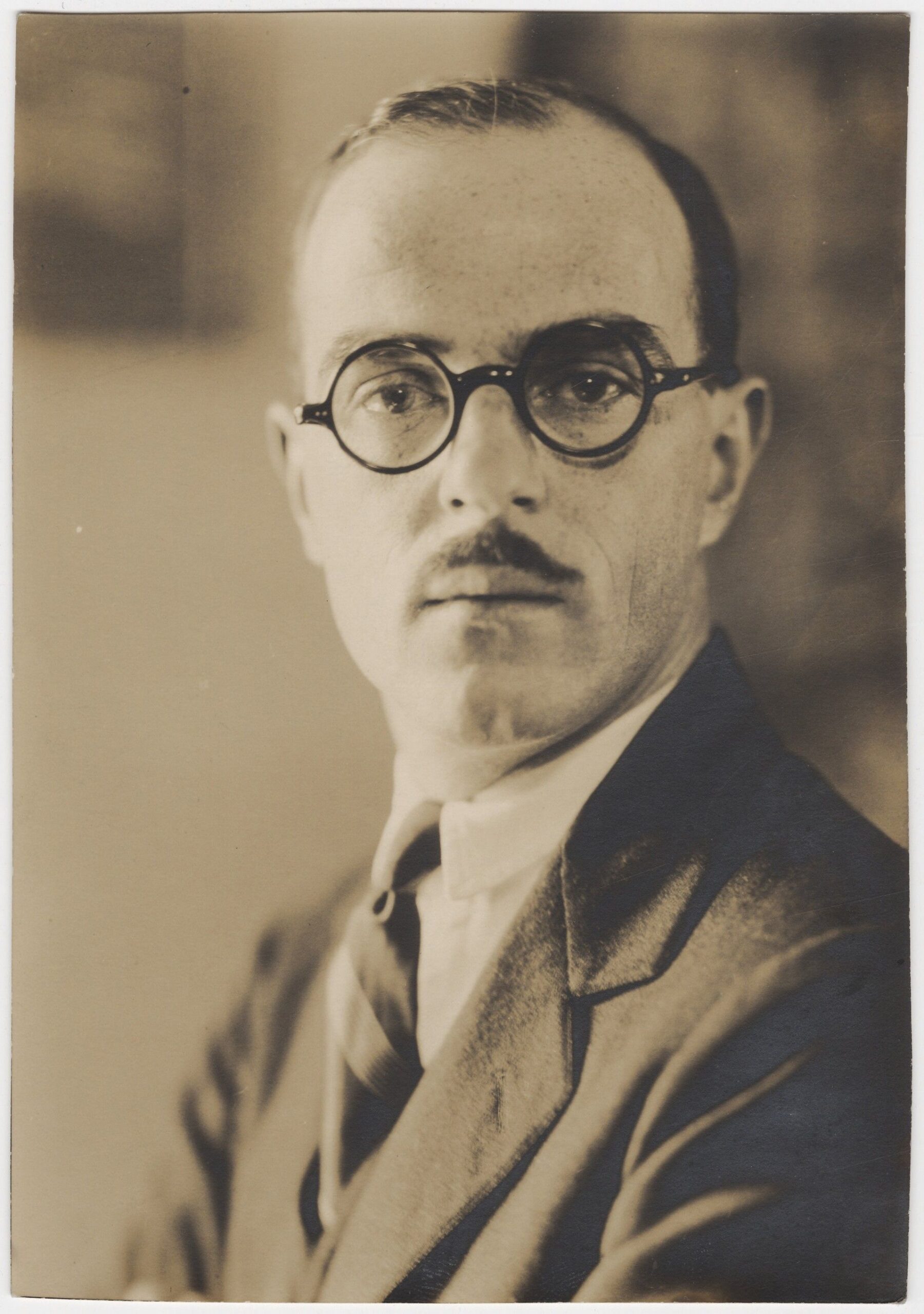
Thornton’s time at Yale was briefly interrupted by the first World War, when he was drafted into the Army’s Coast Artillery Corps in summer 1918. A December discharge allowed him to return to school for the Spring 1919 semester, but not without first meeting another actor, Glenn Hunter, whose own infatuation with Thornton mirrors that with Hughes. Unfortunately, Wilder’s letters back to Hunter do not survive, even as Hunter’s notes suggests, “their relationship could grow through letters,” and includes an invitation for Wilder to rent a room in his building so they could be closer together.
“I wish I might have a long talk with you just tonight,” Hunter wrote to Thornton. “I need patting on the shoulder by someone—like you—someone with whom I could tell what I hope and dream—how I loved being with you that night—more than you could know.” Thornton seems to have sent a photo of himself to Hunter, which earned him praise. “I like your picture so very much, Thornton, and am glad to have it. I’m going to find a neat little frame for it.”
If the proximity to his parents in New Haven would have made fostering these budding connections difficult, Thornton’s work teaching French at New Jersey’s all-boys Lawrenceville School would have further complicated any efforts. But in addition to earning a master’s from Princeton University, Thornton spent those New Jersey years honing his writing skills, culminating in the publication of his debut, The Cabala, in 1926, and The Bridge of San Luis Rey a year later. His life and fortunes changed forever.
Coupled with his curiosity, the opportunities afforded by Thornton’s literary success would take him around the world, with extended stints in Hollywood, Chicago, Arizona, and various European cities. Aside from his meeting with Steward in Zurich, the extent of subsequent infatuations or romantic connections in such places is unclear, though open admission of same-sex attraction would have certainly threatened his literary celebrity and position as the family’s primary breadwinner. What is clear is that Wilder, despite regular returns to Deepwood Drive, found more freedom in his time away from it:
“Explain to Ma that I go to Munich to write some long things—not because of any éloignement from Deepwood Drive or its occupants,” Thornton wrote to his sister and literary executor, Isabel, “but because the tepid sociabilities [sic] of an American city like New Haven tinged with envy, detraction, etc. make work impossible.”
Still, Hamden was always home, and Thornton died in his sleep there on December 7, 1975.
In Our Town, the inhabitants of Grover’s Corners cherish and chafe at life in a single town as they look for their purpose, fall in love for the first time, and settle into death in a cemetery overlooking the community.
Unlike them, Wilder is not buried on a hilltop, but rather in the shadow of one known as “Sleeping Giant,” seven miles north of the “house The Bridge built.” The earth is encroaching on his headstone now, but every day people embody the characters he created, crack open the books he wrote, visit the Beinecke to read letters he never intended to be read, and wander past the Deepwood Drive desk that now stands as a memorial to him at Hamden’s Miller Memorial Library. And for a moment they remember New Haven’s favorite non-native son.
More Stories
Preserving Connecticut’s History
The GLBTQ Archives at Central Connecticut State University Preserving the Past and Looking to the Future
Looking Back