



The GLBTQ Archives at Central Connecticut State University
Preserving the Past and Looking to the Future
By Alex Dueben
It is really the best collection–most inclusive, most comprehensive collection–of queer materials in the entire state,” William Mann said in a recent conversation about the GLBTQ Archives at Central Connecticut State University in New Britain. “Yale has a great collection of queer materials, so does UConn, but if we want to talk about community, the local queer communities, CCSU’s archive is by far the most extensive.”
William Mann has taught at CCSU for many years, and he is one of the people who helped to build the collection over decades. “There are collections that date back into the early 1960s frrom the Kalos society, which was one of the very first gay rights organizations in the country, all the way up through marriage equality and trans rights,” Mann said.
“The collection is so diverse and so comprehensive that for anything you might be interested in terms of Connecticut’s queer history; it’s there. If you wanted to research the history of the drag balls in Connecticut, there’s stuff there for you. If you wanted to research mental health that was available to queer people, it’s there. If you want to look at police and government oppression of queer people in the 50s and 60s and the 70s, it’s there. There’s nothing that we can say at this point that we don’t have. We want more, certainly. Some identities, some experiences are not as well represented as others. But we’re getting there. That’s what makes this collection so special.”
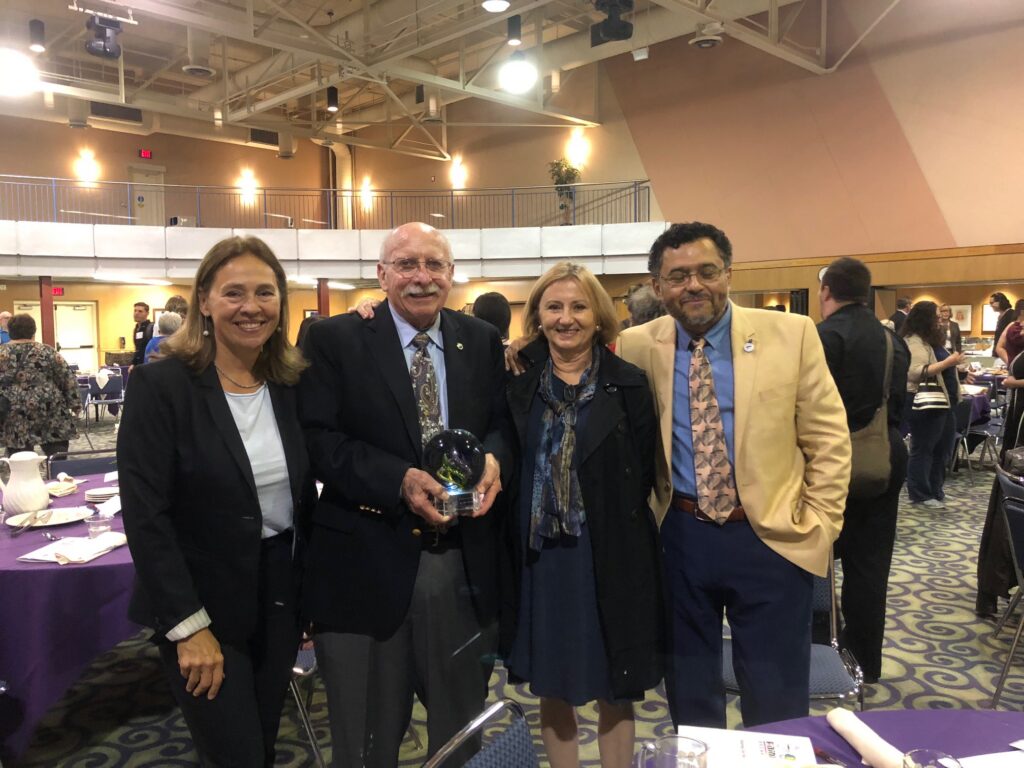
Mann’s relationship to the collection dates back to its beginnings and to the founder of the project, archivist Frank Gagliardi, who recently passed away. Carl Antonucci, the current Director of Library Services at CCSU called Gagliardi “a pioneer” and talking to both men, it was clear the great respect they have for him and his work.
“He was a gay man who came out late in life,” Mann said. “This was a passion project for him. He wanted to make sure that LGBTQ history was preserved in the way other histories are preserved.”
This is an approach that continues at the library today. “It’s very important to us here at the Elihu Burritt Library to be a repository for the entire community,” Antonucci said recently, before listing the many archives and collections that are housed there. For him, it’s a very simple reason why they do this. “It’s people’s history.
“It’s important to people in the community, and it’s important for us to curate it, and to maintain it. I think people feel security with that in a lot of ways. That it’s here, and it’s cared for. Especially now, once it is digitized,” Antonucci said.
“The little historical details make the historical study that you’re doing more rich. It helps students because they can study not just what the history textbook says, but how a real person went through that,” Antonucci said. “One of our new projects is to have a digitization lab where we want to open it up to the community so we can have people come in so we’re not just digitizing faculty and staff publications, but life stories of people.”
That is one aspect of the collection, because it doesn’t just feature the papers and writings of John Loughery, Richard Cardarelli, George W. Henry, Christine Pattee, and others, not just papers of organizations, but oral histories. “It’s a living, growing collection,” Mann said.

“I don’t know how many times I’ve been out in the community and people were saying, a lot of the pioneers in our community are dying,” Antonucci said. “Now more than ever, it’s very easy for us to go out there with a cell phone or a tape recorder to interview people. We want to be part of this, to bring the community into the library. Because a lot of these things you can’t find in AI.”
“The oral history collection is growing all the time. This semester I’m teaching a course in which we are collaborating with Preservation Connecticut to identify queer historic spaces around the state,” Mann said. “To do that, we are conducting this massive outreach oral history project. Having those oral histories is so vital, because we can have pamphlets and meeting notes and minutes and those kinds of things, which are all super important, but to have the voices of the people who were actually involved in, say, the Kalos Society, or the passage of the Gay Rights Bill, or the passage of the Trans Rights Bill. All of these voices are so important to get now. We just lost a major figure, Carolyn Gabel-Brett. I’m so glad that we did get an oral history from her a few years back.”
Mann pointed out that this is important beyond just individual stories. “This is a period in which our history is actively being erased. People are actively trying to erase this history. After so many years of it being obscured and hidden,” Mann said. “It’s really up to the community. We have to save it ourselves. And thankfully, even though Frank has passed on, Renata Vickrey is an incredible archivist and completely supportive of building this collection.”
Having taught for so many years, Mann knows what incorporating the archival collection into his classes can do for students. “Learning the history is very empowering for young people in general, and queer people in particular,” Mann said.
“Queer students would say to me, I’m just so glad to know it’s there. That those papers are there. Some of the really best papers that I’ve had for my students, I’ve put them in the archive, with the students’ permission, because this was great work, and it should be archived. Queer history is not taught in high schools. When they get to college, this is the moment where, before they go off into the world, I want to make sure they know about their history. I shouldn’t just focus on queer students, because half of my classes, perhaps even three quarters of my classes, would be straight students. They were equally as interested in this. They asked, why didn’t we know this about the gay community? Why have we not learned this?”
The archive is vast and having spent some time with it, I know that I only scratched the surface, and I had to ask Mann what he thought were some of the highlights. Besides, of course, his own papers, which are part of the archive.
“The collections are so great, and I think they’re also important. Having lived through the AIDS epidemic, the papers with the Health Collective, with AIDS Action Council. That’s so vital because those voices we lost way too early,” Mann said before listing friends and colleagues whose lives and works are a part of the archive. “I’d also have to add the collection of the Connecticut Coalition for Lesbian and Gay Civil Rights. It was an amazing period in which people finally started coming out and saying, we’ve got to do this. The rallies were getting bigger and bigger and bigger. It was really the blossoming of Connecticut’s queer culture. Those papers are vital as well.”
Antonucci spoke at length about the many aspects of the archive and the library as a whole, but the reason for doing this, and how he sees the university library as a part of the community was very simple. “It happened right here.”
“It’s important for people. They want their history kept and curated, and people trust us that we’re going to keep it in good shape,” Antonucci said. “Your history is not going to be forgotten. That’s what we’re trying to accomplish here.”
More Stories
Revelation and Repression in Thornton Wilder’s New Haven
Preserving Connecticut’s History
Looking Back