



Greater Hartford Gives Unveils PRIDE Giving Circle:
Community Comes Together to Make a Difference
By Christopher Byrne / Photos by Keith Claytor, TimeFrozen Photography
What happens when charitable giving is more than writing a check?
For many people, generosity is a quiet, private transaction: a donation in December, a gift in honor of a friend. It does good, but the engagement is fleeting. For those who want to do more—as individuals and with their donations, giving circles foster connection, and deeper understanding of needs within communities that are served. The way it works is that members pool their money, join forces to understand their community’s needs, and make grants. The voting members are actively involved in determining where revenues go. Yes, the monetary value is significant—and so is the human value. A giving circle doesn’t just provide money. It builds relationships, shared knowledge, and a sense that the community’s future is something its members shape together.
At the Greater Hartford Gives Foundation, this approach goes back decades. The Catalyst Giving Circle Fund began in 1993, and its giving circle has made 68 grants totaling $1.1 million to local nonprofits. The idea has since grown. The Foundation now has four giving circles. In addition to the Catalyst Circle, the Latino Giving Circle was established in 2003, and the Black Giving Circle was launched in 2015. In all, the giving circles have delivered more than $1.75 million in community-enhancing grants.
The newest Foundation initiative is the PRIDE Giving Circle, currently in the planning stages and slated to begin next year. Ramonita Garcia, Donor Experience Officer for Greater Hartford Gives said that the PRIDE Circle “grew out of requests and surveys from the community, particularly around supporting LGBTQIA youth. The Foundation committed an initial $250,000 to seed the fund, giving the circle a strong start before a single member writes a check.”
In addition, she said the new circle is being designed to be as broadly inclusive as possible, making room for people who may be at different financial points in their lives. As with other Giving Circles, a voting membership requires a minimum $365 donation—a dollar a day. However, supporting members, who don’t vote on grants, can be involved on a pay-what-you-can basis. And for $750, a Pay-it-Forward member covers their own seat and sponsors another community member’s voting membership, ensuring that in certain situations, cost isn’t a barrier to taking part in decisions.
That openness is central to the PRIDE Giving Circle’s purpose. Garcia explains that the goal is to create a space for anyone who identifies with the queer community, and the organizers are deliberate about not letting it become a group that serves only a narrow slice of it. A key component of the giving circle initiative is the educational programming that help members understand more fully the issues being addressed and the organizations that the program will support. Garcia said that they plan to bring in non-profit leaders, state representatives, and other community leaders so that participants have a broader understanding of the issues—and how their support can make a difference. She says that “being in the know” about issues is very powerful for community members.
Because it’s so easy to become involved, reaching people beyond the usual circles is part of the plan. As the PRIDE Circle becomes established, organizers will share information through the Foundation’s website and through its community funds, which span the organization’s 29-town region. The idea is to connect with the local “go-to” people whom neighbors already trust. Information on how to join the giving circle is now on the GHG site.
“It’s really people just joining people to make a difference,” Garcia said, adding “in our other circles, it’s the connection that keeps people coming back year after year.”
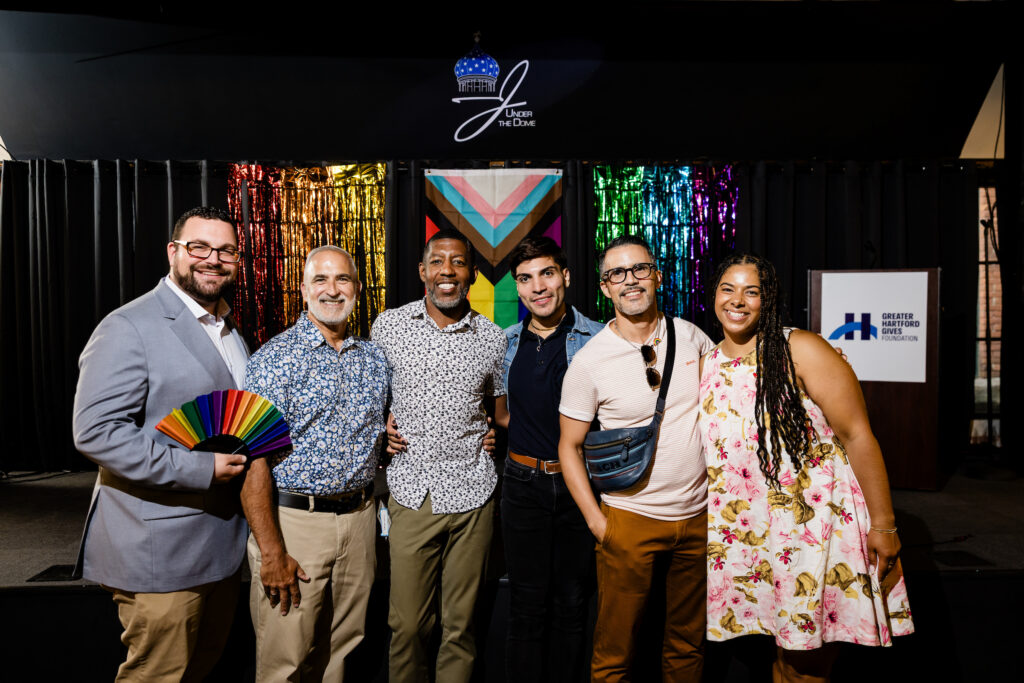
Members of the Steering Committee continue to meet and strategize how to engage more community members to the circle as it gears up for its first year of operations.

Robin P. McHaelen, MSW, McHaelen Consulting Services, LLC, said, “After 30 years leading True Colors, Inc. and organizing the True Colors conference (now called SOGIEcon), I’ve seen how far a small gift can go when it reaches the right hands. I joined this giving circle to put resources directly into underserved queer communities, and to help build a culture of giving that’s led by the community itself.”
The Reverend Edwin Pérez Jr., Senior Minister at Immanuel Congregational Church in Hartford added, “Greater Hartford Gives is important to us because of our overlapping objectives. We’re able to make significant impacts when we work together and when we know who to connect and where.”
He continues, stressing the importance of the relationships being built within the community, “It is those relationships and proximity that exist in Hartford and the Greater Hartford area that can help us direct funds and the grant writing and approvals for grants. Because of our relationships we are well-positioned to be of assistance in that way.”
Steering committee member Martin L. Heft sums up the effort noting that the goal is to attract as broad participation as possible. “Bringing all these like-minded people together, we can really do something to make a difference. And we’re looking at youth, seniors, and everyone in between.” One of the benefits of the Giving Circle is that participants can understand a wider range of issues. Younger people, he says, may come to understand issues like senior housing in the LGBTQ+ community, while older folks may understand the cultural, mental health, and medical issues faced by younger LGBTQ+ individuals. “This is a great process to bring all of that about,” he concluded.
For more on Greater Hartford Gives—and to become involved—visit the Foundation’s website at greaterhartfordgives.org.
More Stories
Schedule of Events: Pride Month and Beyond, 2025
Ashley Flagg: The Laurel
From Humble Beginnings