




SEX TALK: When Loving Your Body is Challenging
Everyone has a body, and every body is different. That should be something to celebrate. Unfortunately, with the ubiquity of social media, Hollywood movies, and advertising, most of us are exposed to a very narrow representation of what is considered attractive by the mainstream. Our online algorithms push a specific ideal of beauty: white, fit, and able-bodied. Most of us don’t even come close! A lack of representation can be damaging to the self-image, as well as to our perception of what is “normal.” As a result, so-called ideals are continually reinforced in the media, and that can have far-reaching effects on our personal, romantic, and intimate lives.
Growing up, most of us hear from our parents that beauty is on the inside. I do believe that being kind and compassionate are more important traits than physical appearance. However, in real life, our looks are the first thing others see and judge us on. In terms of romance, a 2024 study from researchers at the University of Amsterdam found that attractiveness is up to 20 times more important, statistically, than intelligence in the online dating scene.
Social media, in particular, has an outsized effect on body image. A scientific review published in 2024 found that over the past 10 years, rates of body dissatisfaction have gone up significantly. This can be largely attributed to increased exposure to idealized, doctored, and even fake images that come with social media use. According to the Mental Health Foundation, research indicates that gay men are particularly affected by pressure to conform to unattainable standards. Trans women may experience intense pressure to pass, exacerbated by already-existing gender dysphoria. All segments of the LGBTQ+ population report feeling dissatisfied with their bodies at least as much as—if not more often than—the general population.
Not fitting into mainstream standards can be a tough pill to swallow, especially if you identify with a marginalized group. Feeling unattractive—whether or not others perceive you as such—has a negative impact on sexual confidence. People with poor body image tend to feel less sexually confident. They are more likely to experience anxiety during sex, making it hard for them to focus on and enjoy the act and experience.
Sexual safety is also impacted by dissatisfaction with appearance. When people feel badly about their bodies, they are less likely to insist on steps to stay safe, such as condom use. If a partner does not wish to use protection, people with poor body image are likely to acquiesce, even if they would prefer to protect themselves.
Learning to accept your body can be a lifelong journey. It’s very difficult when our society is constantly blasting you with such a limited view of who counts as attractive! For those who can access professional help, therapy can be extremely valuable in achieving body acceptance. There are many queer-affirming, body-positive therapists offering a range of treatment styles. They are trained to guide you in redirecting your thinking to increase self-esteem.
Another method that research has proven effective is the use of sensate awareness techniques. A 2018 study found that women whose anxiety around their bodies affected their sexual satisfaction saw great improvement when they were trained in mindfulness exercises. Keeping a focus on the sensations and feelings of sex, while staying in communication with a partner, helps keep away anxious, self-defeating thoughts.
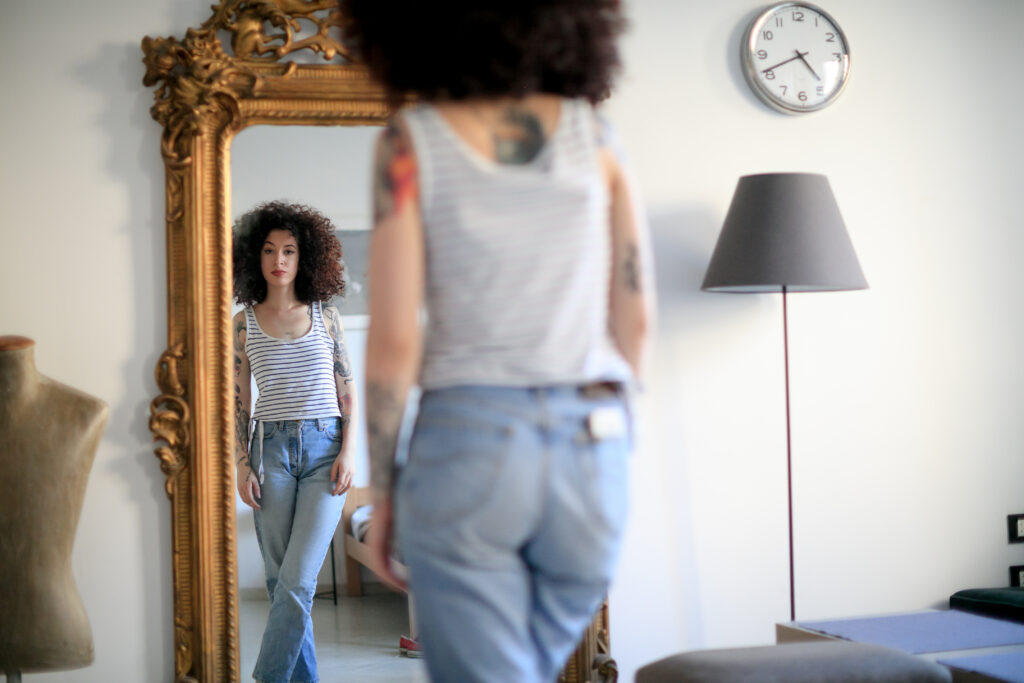
Masturbation is also associated with higher self-esteem! Spending intimate time with yourself helps you understand your body and enjoy it as it is, not as you wish it was. People who practice self-touch regularly experience increased self-esteem and sexual satisfaction when partnered. Rather than rushing through it to achieve orgasm, take time to get to know yourself. Explore nongenital parts of your body; admire yourself in a mirror; go slow. Self discovery and acceptance takes time.
Though none of these is a magic cure to negative body image, practicing each of these strategies regularly will gradually improve your relationship with your body. Focus on what your body can do, not where you think it’s lacking. It’s amazing to experience bodily pleasure, alone or partnered. How lucky we are to have bodies with which to experience all life has to offer!

—Kimberly Adamski

More Stories
The Regina A. Quick Center for the Arts At the Intersection of Creativity and Community
Mental Health Isn’t Seasonal, But Stress Can Be
SEX TALK: Kinky and Queer