




Colombia: A Welcoming Gem for LGBTQ+ Travelers
By Frank Rizzo
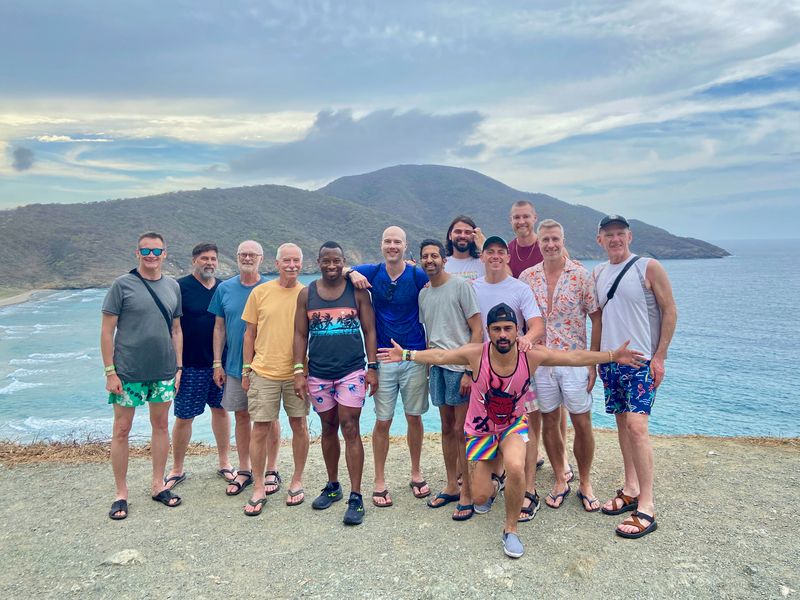
Our Branford friends John Allen and Keith Hyatte raved about the sun, fun and friendliness during their trip to Colombia, especially as gay men.
“It’s very international, very welcoming, and very much a bargain,” said John. “We want to go back and do even more exploring.”
Intrigued, I reached out to a New Haven artist friend, Ricardo Gutiérrez, who grew up in Colombia, and he described the interconnectedness of the country as “a warm, colorful paradise where people actually see you.” He cited Bogota’s “amazing energy” and the Caribbean port city of Cartagena for its “sensuality and history.”
He was also encouraging and proud that Colombia, after years of internal violence among drug cartels in the ’90s, was now both stable and inviting for tourism and has become a beacon for LGBTQ+ travelers.
Despite being a predominantly Catholic country, Colombia is one of the most progressive countries south of our border. Homosexuality has been legal since 1981. Anti-discrimination laws were introduced in 2011, and gay marriage and adoption laws were passed in 2016. Updating gender on government IDs is a straightforward process for transgender people. In 2018 Bogota elected its first lesbian mayor. Bogota Pride, which began in 1982, is held every June along with Diverso Cinema Festival. In Cartagena, there’s a six-day Pride Festival which runs alongside Rumours Festival, the annual five-day circuit party attracting thousands.
Doing a bit more research we learned that it is a country of a rich, diverse and complex culture, influenced by its geography and historic blend of Spanish, African and Indigenous peoples. We were already familiar with the magic realism of Nobel Prize-winning author Gabriel García Márquez (One Hundred Years of Solitude, Love in the Time of Cholera) and artist Fernando Botero (known for his voluminous figures in sculptures and paintings). John and Keith also reminded us that the film Romancing the Stone was filmed there, and we learned that Anthony Bourdain did two shows on Colombia’s food, culture and politics.
However, just as we were packing for our January trip, Trump ordered an invasion of neighboring Venezuela, kidnapping its president, and dramatically raising the political temperature around the world as well as alienating our long-standing Latin allies. Friends assured us that we should not encounter any special problems—and we didn’t. (We also figured we could always say we are Canadians, eh?)
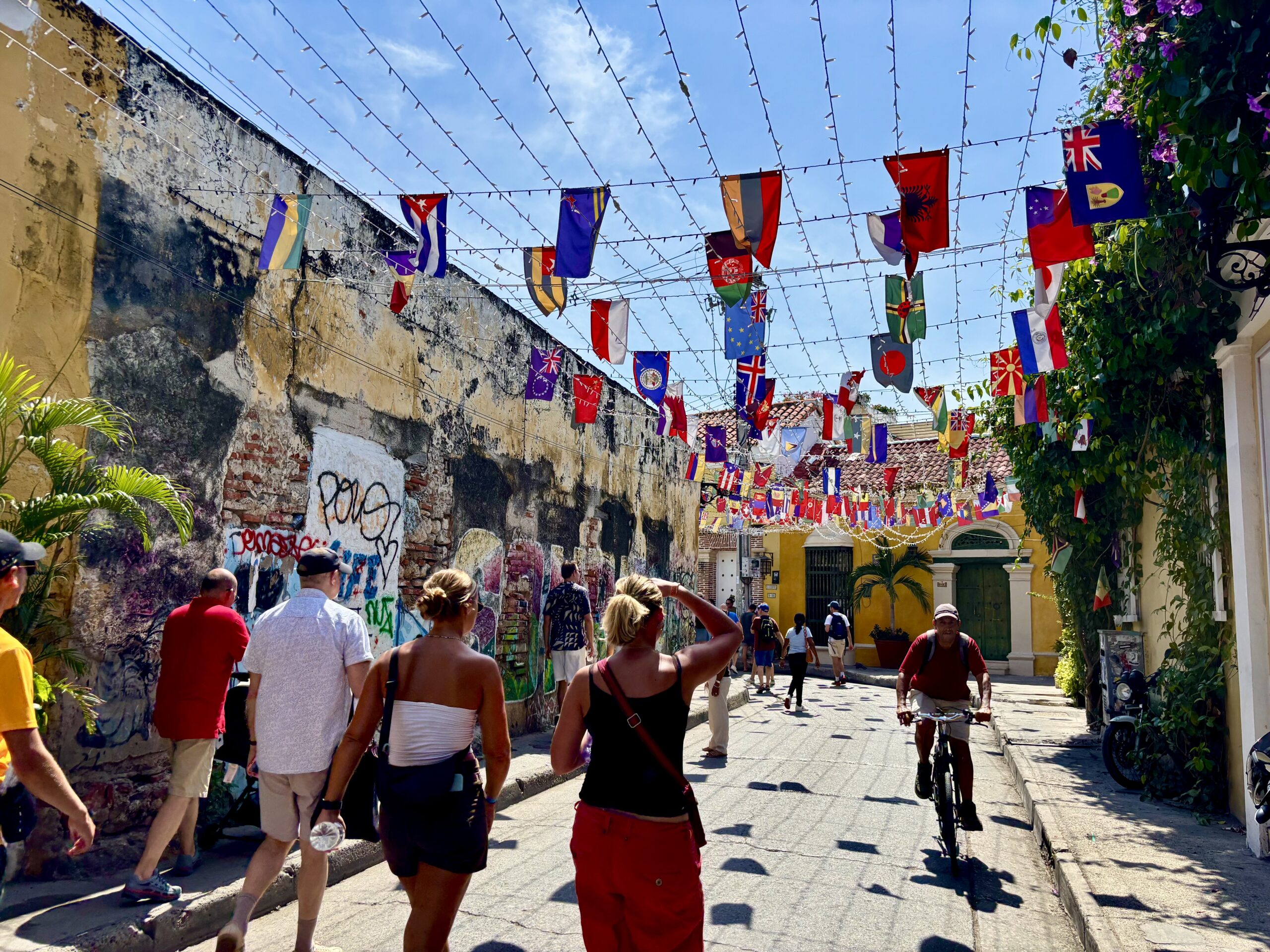
Bogotá
We flew to the capital of Bogotá for a stay of a few days, followed by a short flight and week’s visit to Cartagena. Traveling between the two cities by land would take more than 20 hours.

At the base of the Andres mountains is Bogotá, the country’s capital. With an altitude of more than 8,500 feet—3,000 feet higher than Denver—it can literally take your breath away at first, but after getting acclimated, travelers should be good to go (though definitely take it easy for the first day for two).

All museums are free, and one of the most popular is the Museo del Oro (The Gold Museum), which has more gilt than Midas. Our favorite cultural day was an afternoon visit to the Botero Museum located in a complex of other museums and cafes. There is also the Museo LGBTI, homage to NYC’s Stonewall Inn which features artifacts and exhibits related to queer global and Colombian culture, history, and art.
Other tourist attractions include the Jose Celestino Mutis Botanical Garden, the Planetarium, and busy colorful squares of venders, musicians and where for a small gratuity you can be pictured with a llama or two. A block from Plaza de Bolivar there’s the tiny, limited menu La Puerto Falso, known for its ajiaco soup and tamales and operating since 1816. (Bourdain did a segment here.)
The Bohemian-like Chapinero—especially the neighborhood known as Chapinero Alto—is the most LGBTQ+—friendly section of the city. Party-people head to the largest gay nightclub in Latin America—and one of the largest in the world: Theatron. It’s a high-energy mega-club with five floors, more than a dozen themed rooms, and separate dance floors offering different vibes and styles of music. (Note: It doesn’t really get going until around midnight, and it’s only open Thursdays to Saturdays.)
Other LGBTQ+ hotspots include the Bearlove Cafe Bar, Octava Club, El Mozo, Bar Chiquita Bogotá, Brokeback Mountain, the three-story Leos Bar, El Recreo de Adan, the bar El Perro y la Calandria and Videoclub. Friskier gays might want to check out the Dagoas Sauna Hostel, Complices Spa, and the Sauna Saint Moritz.
Cartagena
After a few days we were off to Cartagena., the country’s fifth-largest city. Cartagena is a popular sunny-weather destination for not only for international but Colombian tourists, too, lured by two major draws.
The first are the gorgeous islands off its coast and just a short boat excursion away for a day trip of swimming, snorkeling, diving or just chilling. Landlubbers can check out Playa Hollywood in Bocagrande, a popular draw for all tourists. The gay friendly Hollywood Beach is located in front of the Hotel Caribe in El Laguito.
The other big draw is Cartagena’s historic, coral-colored, walled city-within-a-city called Old Town (also Ciudad Amurallada, Old City or Walled City), which is a UNESCO World Heritage site. It’s in dramatic contrast to the modern, high-rise, beachfront skyline just down the coast.
Old Town is a maze of cobblestone paths, colonial-style buildings, walls filled with colorful street art, bougainvillea-draped wooden balconies, and music wafting from majestic churches, expansive plazas and vibrant clubs and restaurants. On the darker side, there’s the grand Palace of the Inquisition where you can see horrifying instruments of torture. Colorfully dressed women called Palenqueras stroll through the squares. They are the descendants of fugitive slaves brought from Africa, and you are invited to be photographed with them, though a monetary gift is expected.
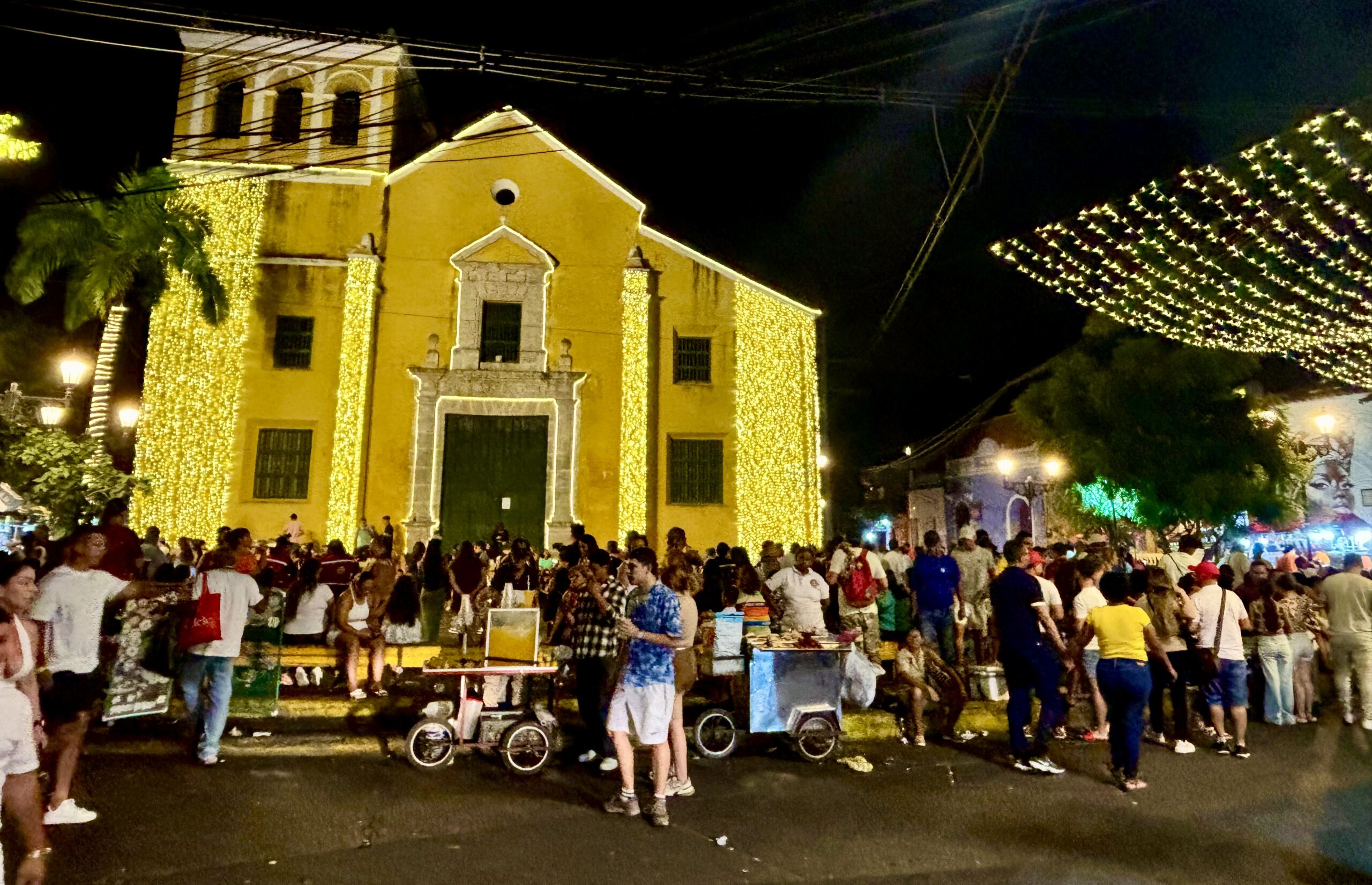
Just a short stroll away is the slightly less touristy neighborhood called Getsemani. This area is colorful and filled with coffee shops, bustling cafes, and lively streets and squares. We were there in early January, and the holiday decorations were still up gloriously ablaze, though one worried about the city’s power grid. Both areas are picture-ready, and you only have to go a few steps before you come across one joyful Instagram poser after another.
There is not “gay neighborhood” per se in Cartagena, but the LGBTQ+ bars and clubs include: The City Club (located at the western edge of the old town); Gabanna Club (located across the bridge outside the old town towards the east of the city); Taboo Disco Club (in Getsemani); and Avatar Disco Bar (at La Heroica, southeast of the old town. In Getsemani, overlooking Plaza de la Trinidad, there’s Roma Club (at Avenida Santander on the second floor of Mega Tiendas.)
We took one fascinating side trip—another stop in Bourdain’s explorations—but it’s not for everyone. It’s the Bazurto Market, an epic, working maze of a market with endless little stalls of all kinds, and shopped mainly by locals. It’s crowded, intense, somewhat sketchy and a challenge to navigate—which is why we hired a guide who made the ins and outs so much easier.
Safety: Progressive attitudes may not be as well-shared when traveling beyond major cities, and especially to the rural countryside, so discretion is advised. Of course, when traveling in a major city anywhere in the world, tourists should be aware of pickpockets and scammers. Don’t flash your cell phone, wallet, and keep your expensive jewelry at home. Don’t dress to impress. It’s a casual vibe here.
- Gay Tour Groups: Outadventures.com, OutinColombia.com, HeTravel.com, TheQueerScout.com, Coda-Tours.com.
- Weather: While Colombia is near the equator, weather in Bogota can change abruptly going from sunny to rainy to chilly and back again during one day. (The rainy season begins in March, and it lasts several months.) In Cartagena it’s the endless summer.
- Transportation: There is no subway system in Bogota or Cartagena, so we skipped the bus system and opted for Ubers and taxis, which were inexpensive and easy with the apps, which also avoided negotiating with cab drivers who did not speak English.
- Money: Colombia pesos is the currency, and you can exchange money at the airport or at exchange houses throughout the city. You’ll probably get the best rate from an ATM, although your bank may charge you a fee for each transaction. In early 2026, the exchange rate was approximately 37,000 pesos to the dollar. The math of shopping took a while to get used to.
- Food: There’s fruit galore, including many you’ve never seen or heard of but are delicious. There’s great coffee, but try the hot chocolate (with, yes, cheese on the side). Also, don’t miss its tamales, chicharrón (fried pork belly or skin), carne asada (marinated and grilled thinly sliced smokey and charred beef), and ajiaco santafereño (a chicken and potato soup).
- Also consider: The four-day Carnaval in Barranquilla (February/March): about two hours from Cartagena, which holds one of the largest carnival events in the world. One day is dedicated to the LGBTQ community. In the week leading up to Easter in Cartagena there’s Festival del Dulce (or ‘candy festival’). Colombia exports its finest to Switzerland but here you haver sample io\t at the source.
More Stories
Saybrook Point Resort & Marina
A LOVE LETTER TO CONNECTICUT –WINVIAN FARM – An Inclusive Relais & Chateaux Resort With Heart, Soul, Sophistication and Whimsy
THE HOMESTEAD—A Place to Unwind In Madison