



Queer Nonprofits in the New Political Era
By Jane Latus
Directly and through ripple effects, actions and slurs out of Washington, DC are strongly impacting Connecticut’s LGBTQ+ community and the organizations that serve them. Individual finances, mental health, and kids are taking the biggest hits, say the groups’ leaders.
Connecticut Voice occasionally checks in with the state’s nonprofits to see how they and those they serve are doing, especially during upheavals like the Covid epidemic. In this year of cutbacks and attacks, leaders say they’re doing more with less money—but also with a surge of new volunteers. They expressed shock that the state’s two largest medical institutions acquiesced to federal threats and abruptly stopped providing gender affirming care to almost 1,000 youths. Nonprofits have been helping families with the fallout.
The leaders we spoke with though, are adamantly hopeful.
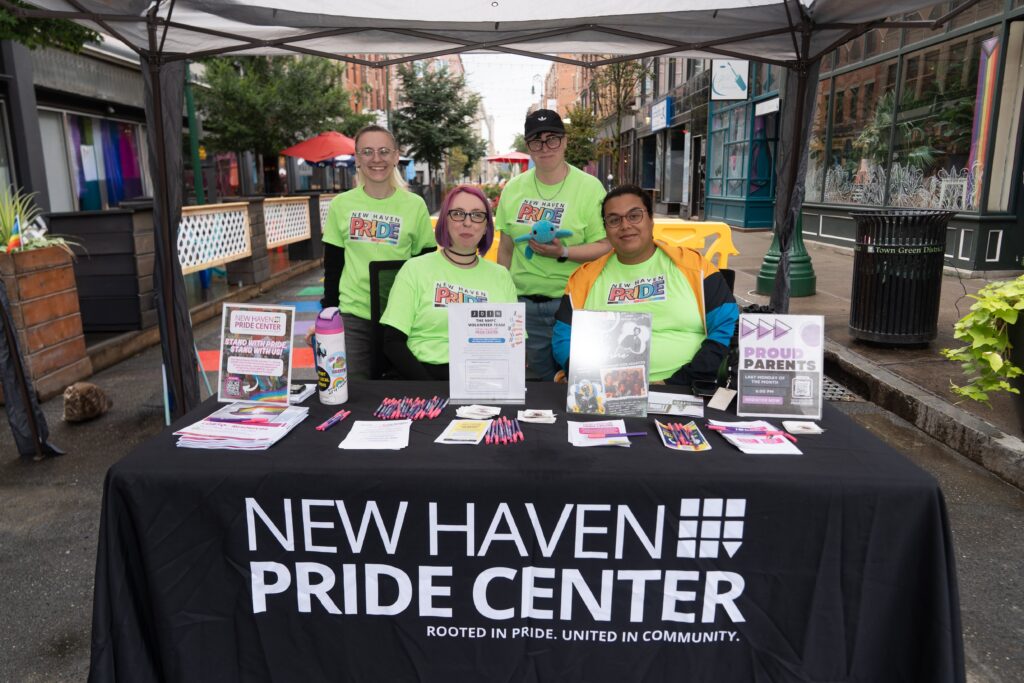
“The queer community is not new to this. But in New Haven and all over the state, this community is strong, and we are powerful. We will be okay,” says Laura Boccadaro, operations director for the New Haven Pride Center. She added a qualifier: “But we’re very tired.”
Says Mel Cordner, executive director of Q Plus, which provides programs and safe spaces for youths, “We see the difference, so that’s why we do what we do.”
“It’s a very challenging time. We’re seeing a large increase in demand for our services,” says Triangle Community Center Executive Director Rachel Simon.
Bridgeport Pride Center Executive Director Marcus Brown (who is also a state legislator) says the center is busiest helping with financial hardship—like providing microgrants to people one missed rent payment away from eviction, or a missed car payment away from losing transportation to their job.
Some hopeful news is that Connecticut is both a relatively safe state and in a financially sound enough position to afford to guarantee services to marginalized communities, should elected officials choose to do so, says Equality Connecticut Executive Director Matt Blinstribus. “We have the historic opportunity to make sure our most vulnerable populations have the care that they need. We are among the last lines of defense in a climate like this.”

Other good news is the addition of an ambitious new nonprofit, expected to open in mid-2026: the Hartford Pride Center. It will fill a void in the northern half of the state and be the first to provide housing.

And in January, The Health Collective (formerly the Hartford Gay & Lesbian Health Collective) will move into a new Hartford location, doubling its space and accommodating more services.
ANXIOUS YOUTHS AND FAMILIES
First in need of defending, leaders say, are kids. “Families are scared they’re going to lose their kids, literally,” say Cordner of Q Plus. “Kids are not doing well. Not that queer kids are ever doing well because everything is stacked against them. But I’ve never seen the level of self-harm we have right now.”
“This generation isn’t used to having these fights,” says Tiffany Pippins, program manager for the Lighthouse, a peer-to-peer social support group for ages 12-18. Lighthouse works with municipalities and organizations in Fairfield County (including the Bridgeport Pride Center) to provide safe spaces for kids to socialize.
“Connecticut kids are very smart. They are well-educated and well-versed in what’s going on,” Pippins says. Thus, they are anxious. “Our kids take solace in knowing there are adults here who support them.”
Parents whose children lost medical care have come into the New Haven Pride Center crying, says Boccadaro. “It’s been a devastating blow to see this happening in Connecticut. Referring to Yale New Haven Hospital and Connecticut Children’s Hospital, she says, “These multi-billion-dollar organizations are completely failing our community.” She adds, “I wish we’d seen [state government] reps call out these big health institutions.”
Cordner agrees, saying, “There’s no reason the state is not loudly standing up [for kids].”
Supportive statements only go so far, says Equality Connecticut’s Blinstrubas. “What concerns me is action, when it comes time to vote or open up the budget. Of course, vocal support helps young people, but kids also benefit from schools that are well-funded and safe.”
In Bridgeport, Brown has also had parents of about a dozen children who lost medical care “come in in tears. They feel helpless. That breaks me.” The center helped the families find care and, when needed, financial aid.
STRAINED PERSONAL FINANCES
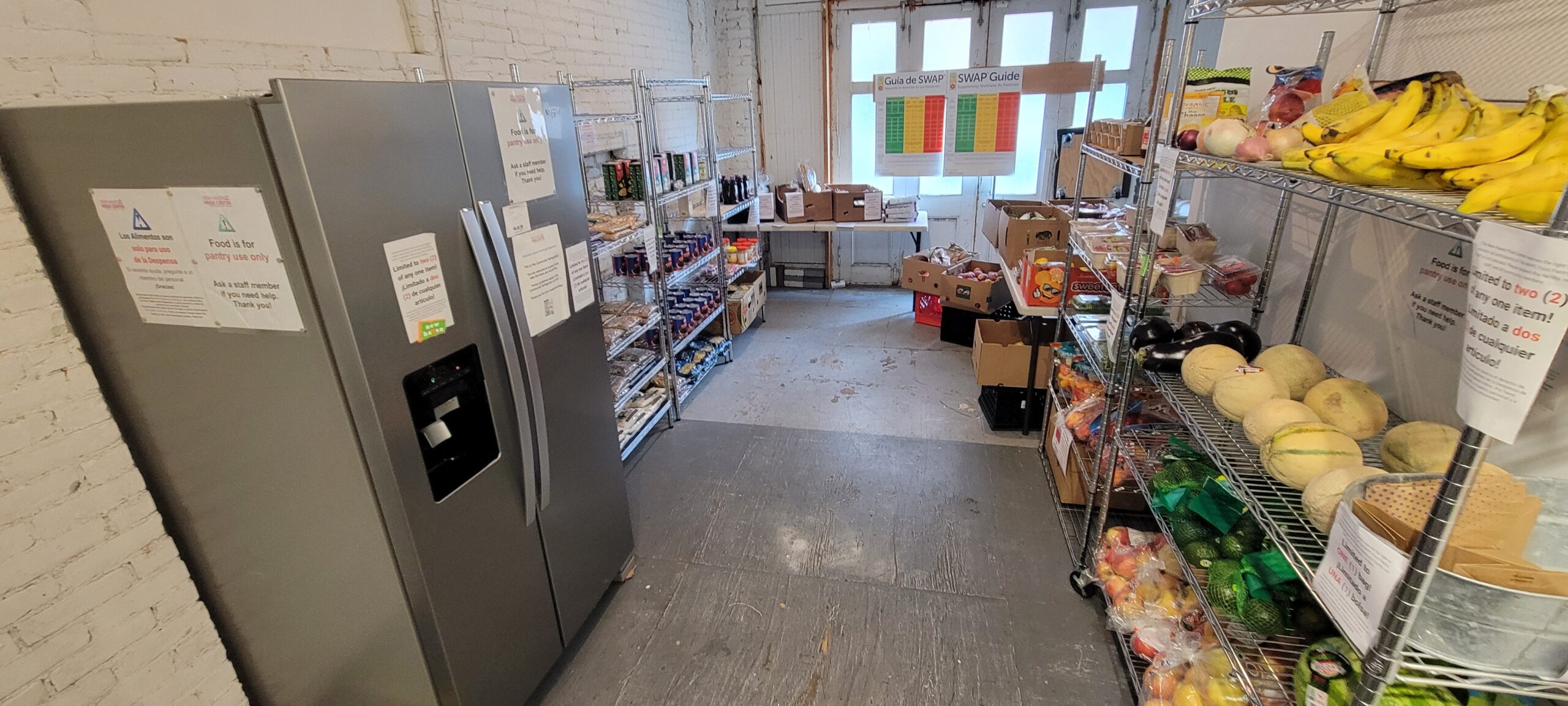
Many people, disproportionately LGBTQ+, have been kicked off SNAP, housing and other federal aid this year. Demand for the food pantry, housing assistance, clothing and the hygiene pantry has doubled at the New Haven Pride Center. “It’s not like our finances have doubled,” says Boccadaro, adding “We had a line today for our food pantry.”
When we spoke with her, the center was actively helping 22 people find housing. Most are young adults.
Demand for Triangle Community Center’s food pantry is up 89 percent over 2024, says Simon. Numbers are also way up at The Health Collective’s twice-weekly pantry in Manchester, says Executive Director Anthony DiLizia.
Homelessness is the biggest challenge in Bridgeport, says Brown. There aren’t enough housing units. The queer community’s housing instability rate is even higher, and, he adds, “We’re not even counting our homeless population in the right way, so we can’t address it.” For example, he says, trading sex for housing, a survival tactic for youths kicked out of their homes because of their identities, isn’t counted.
Nonprofits themselves have been impacted—and in unexpected ways—by the political climate. Three companies denied insurance to the New Haven Pride Center because they were deemed too high risk by being an LGBTQ+ organization. “Our youth programming was what they were concerned about,” says Boccadaro.
Some donors have started giving anonymously, says Simon. Some corporations have cut back on funding anything considered DEI-related. Brown says Bridgeport has lost some corporate sponsors this year, but says fundraising is still going well. “I think people see the seriousness of what’s going on in this country.”
WORSENING MENTAL HEALTH
Needs are acute, says Simon of the Triangle Community Center, and she has the numbers to prove it. The center’s needs assessment this year found that 70 percent of all respondents had suicidal thoughts in their lifetime, but 67 percent of those thoughts occurred within the last 12 months for youths, and 48 percent for adults.
Simon adds that she hears anecdotal reports of more LGBTQ+ people seeking inpatient psychiatric care.
For gender nonconforming kids, every step—like taking puberty-blocking hormones—is a lifeline, says Cordner. “When that gets yanked out from under them, they don’t know what to do. The risk is higher. I’m referring more kids to higher levels of care than I was this time of year ago.”
Being constantly targeted is getting to kids, they add. “There’s a new thing every week trans people are being blamed for.”
“Something we’re seeing a lot is just loneliness,” says Boccadaro. New Haven Pride Center offers social groups for all ages, including a Rainbow Club for those 55 and up.
The Health Collective will launch a new mental health program next year. Says DiLizia, “The community is calling for it. There are a lot of people who are scared. It’s a heavy emotion to carry with you every day. But it also gives you motivation to serve the community, when they need it most.”
COMING SOON: THE HARTFORD PRIDE CENTER
David Grant will be executive director of the new center when it opens, expected in summer 2026. Grant was LGBTQ+ liaison to Hartford Mayor Luke Bronin in 2020 when Bronin tasked him with organizing a commemoration of the Stonewall riots’ 50th anniversary. Recognizing the lack of services in the northern half of the state, that group evolved into the Hartford Pride Center committee.
The center will have two key differences from others, says Grant. It will provide housing, and it will be “a support and resource hub for other LGBTQ+ organizations,” offering staff support for work like obtaining grants.
INFLUX OF HELP AND HOPE
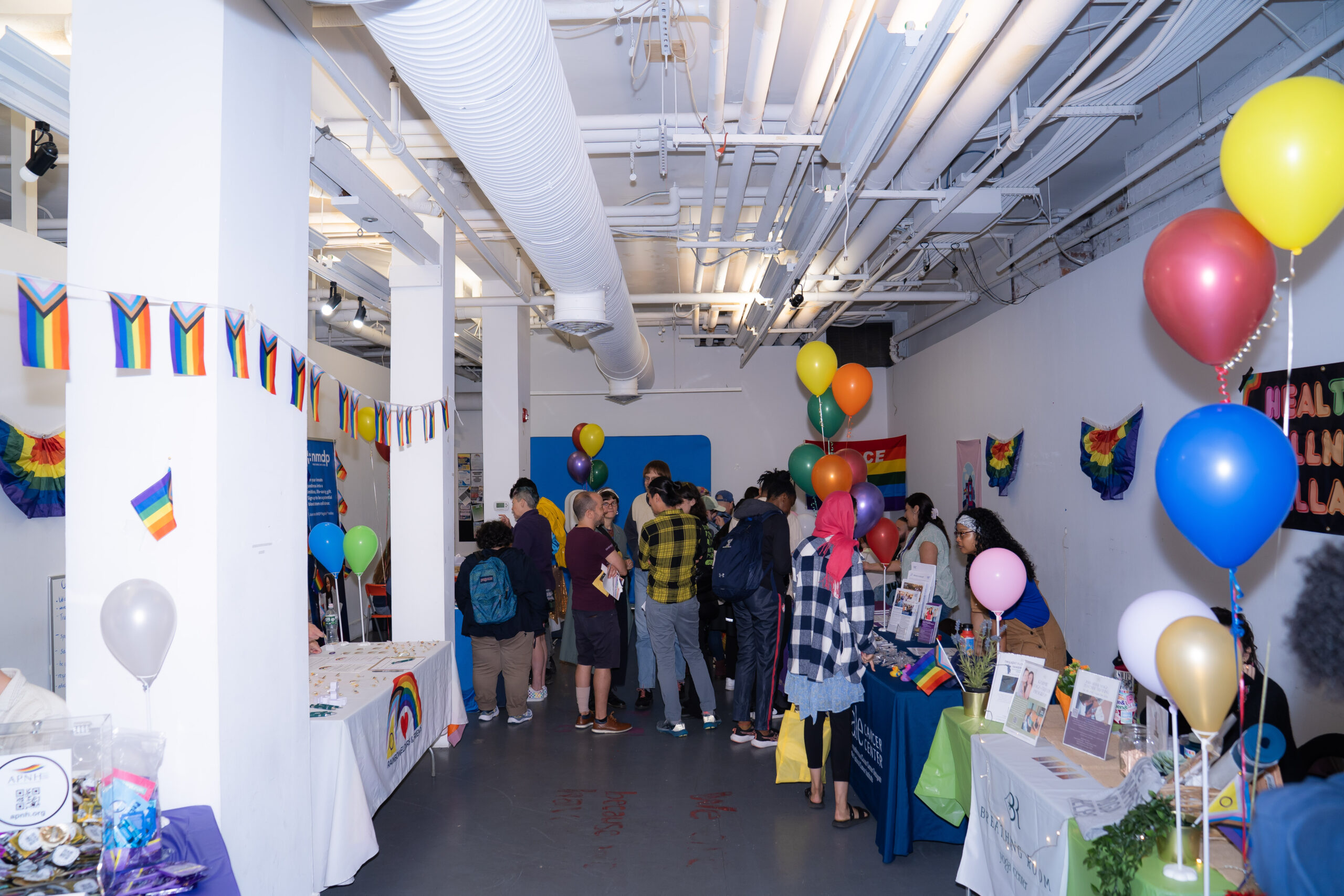
Simply moving to a new, more visible location two years ago was a boost for the New Haven Pride Center. The previous landlord didn’t allow the center to post a sign outside the building, where it was located underground. Now, it has ground-level windows with signs-a-plenty. “Lots more people drop in and say we didn’t know there was a Pride Center here,” says Boccadaro. The center is now fully wheelchair accessible and has more room for programs. Now that more kids know about it, she says, “They just come here and hang out because they don’t have anywhere else. They feel safe.”
She also reports “a huge influx of community wanting to come in and volunteer, because of the political climate.” Volunteers have launched new programs like the Stitch and Chat Club, Black Queer Women’s Group, and Queer Men’s Book Club. Yale School of Medicine’s Neighborhood Health Project stepped in when another donor lost funding and keeps the hygiene pantry stocked.
Brown has seen the same outpouring of support in Bridgeport. “Folks in the community are stepping up and organizing events held in our space,” he says, and straight allies are primarily responsible for donations to the food pantry.
Organizations are eager for volunteers and donations of items, food or money. Boccadaro also requests that folks “share our stuff online. The more we talk about these things, the more we know about them.”
“Putting a bumper sticker on your car could be the thing that turns a kid’s day around,” says Cordner
Those seeking support or resources can contact any of the organizations featured in this story. The City of New Haven worked with the Pride Center to create an LGBTQ+ Toolkit, available on the city website, listing resources including for immigration and legal aid. (Look for “chief administrative officer” then “LGBTQ+ liaison.”)

Cordner suggests, “Find mutual aid and support. Start with your town’s pride committee, or if you don’t have one, look for one in the town next door.” If that fails, she suggests asking a librarian.
Especially since kids aren’t independent travelers, Q Plus offers both online and in-person events. Says Cordner, “We have programming that focuses on creating joy and building safe spaces and relationships. We need to keep on creating and inviting others into those spaces We’re not gonna’ stop just because people have been terrible.”
More Stories